
What goes in the green bin (and what doesn't)
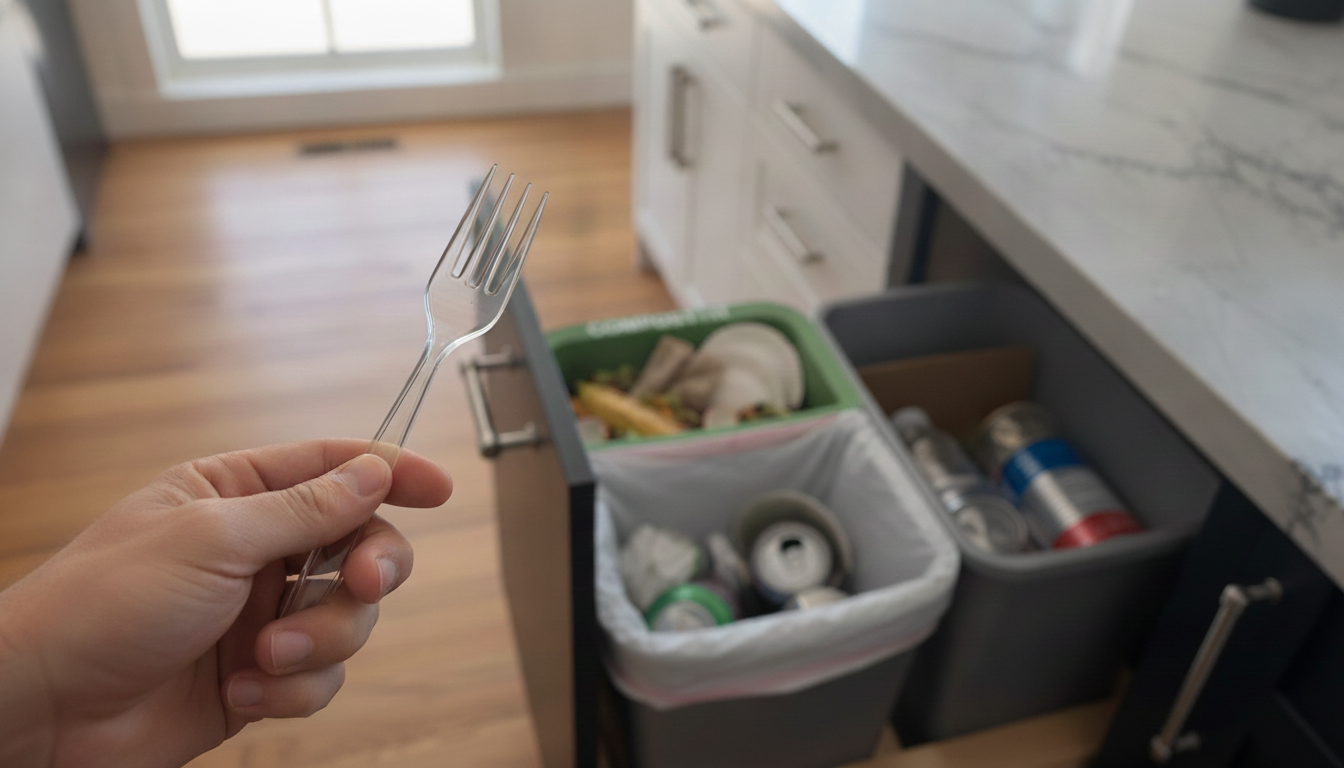
If you live in California, your green bin stopped being just for yard waste a while ago. Under SB 1383, the state's organic waste law, every household and business is required to keep food scraps and food-soiled paper out of the landfill and put them in the organics bin instead. Most people are on board with the idea. The questions start at the kitchen counter, with a used paper plate in one hand and a yogurt cup in the other.
Here is the short version, and then the details.
The one-line rule
If it was food, or it touched food and is made of paper, it goes in the green bin. If it is plastic, foil or foam, it goes in the trash.
That rule covers almost everything that comes out of a kitchen. The exceptions are mostly packaging that looks like paper but isn't.
Food scraps: all of it
The part people get wrong most often is assuming the green bin is for vegetable peelings only. It isn't. Organic waste means all food, including:
- Fruit and vegetable scraps, peels, cores and pits
- Meat, poultry, fish and bones
- Dairy, cheese and eggshells
- Bread, pasta, rice and leftovers
- Coffee grounds and paper filters, tea bags
- Plate scrapings, including sauces and grease
Meat and dairy are the surprise for most households. In a backyard compost pile they attract pests, so a generation of gardeners learned to leave them out. Municipal organics are processed at facilities that run hot enough to handle them, and your hauler wants them.
Food-soiled paper
This is the category SB 1383 added to many people's mental list, and it is the one CompostFit was designed around. Paper that has touched food cannot be recycled, and it breaks down with the food, so it belongs in the green bin:
- Paper plates and paper bowls, as long as they have no wax or plastic coating
- Paper napkins and paper towels
- Greasy pizza boxes and other food-soiled cardboard
- Uncoated paper takeout containers and paper bags from the bakery
A full-size paper plate is the test of whether your compost setup actually works. Most countertop bins are too small for one, so the plate goes in the trash and the whole meal's worth of scraps goes with it. CompostFit's opening was sized so a standard paper plate lies flat inside it.
What still goes in the trash
- Plastic of any kind, including produce bags, cling film and the window on a pasta box
- Foil and foil-lined wrappers
- Styrofoam and foam trays
- Wax-coated or plastic-lined paper cups and plates (if it feels glossy or shiny, it is coated)
- Produce stickers and rubber bands
- Pet waste and diapers
The three mistakes that get a bin tagged
Haulers inspect organics bins, and a contaminated one can be left at the curb with a notice or, after repeat offences, a fine. Three things cause nearly all of it.
1. Plastic bags. Scraps collected in a plastic bag and dropped in whole are the most common contamination there is. If you line your kitchen bin, use a paper bag or an approved compostable liner, or skip the liner altogether. CompostFit needs no liner at all: you lift it out by the rim, tip it into the green bin and put it in the dishwasher.
2. Coated paper. A glossy paper plate, a lined coffee cup or a waxed produce box reads as paper and sorts as plastic. When in doubt, scratch it with a fingernail. If a film peels up, it is coated.
3. "Compostable" packaging. Cups, cutlery and clamshells labelled compostable are made for commercial facilities, and not every facility accepts them. Some California haulers take them and some do not. Check your own hauler's list before putting them in the green bin, because the label alone is not permission.
Every city's list is slightly different
SB 1383 sets the rule statewide, but each jurisdiction's hauler publishes its own accepted-materials list, and the edge cases (compostable packaging, pet waste, cooking oil) vary from one to the next. Your city or county website, or the sticker on the bin itself, is the final word. The lists above are the common ground.
Making the sorting automatic
The reason so much food still ends up in landfills is not that people disagree with the rule. It is that the compost bin lives somewhere else. A countertop pail means a separate trip, a lid to open, a smell to manage and a bag to buy. When the bin is across the room, the plate goes in the trash.
CompostFit puts the organics partition inside the pull-out trash can you already have, next to the bag. Sorting happens in the same motion as throwing something away, the paper plate fits, and emptying is a lift and a tip into the green bin. That is the whole design: make the right bin the closer one.