
Raising Good Dirt- Getting your Kids involved in Composting!
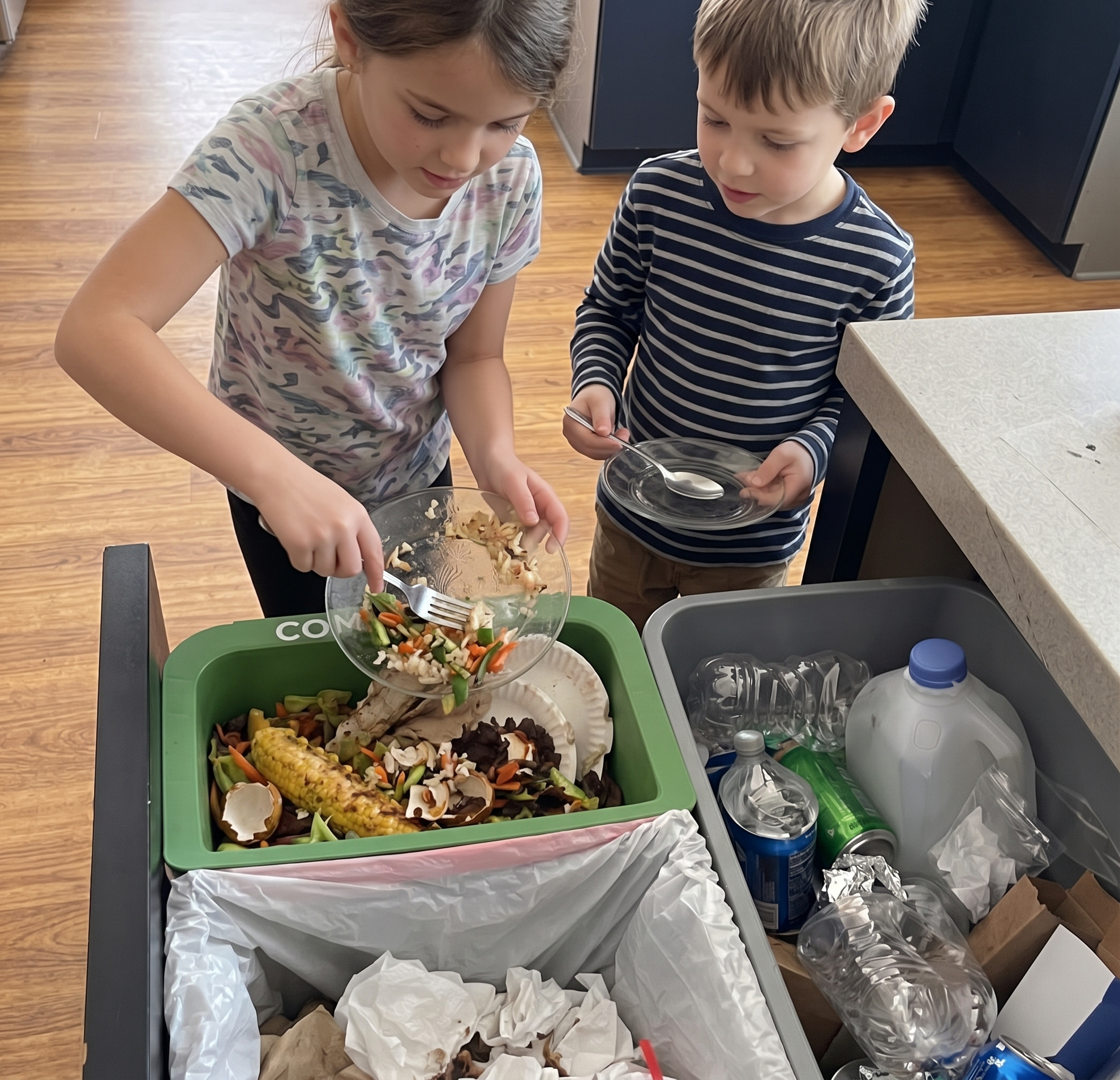
Dinner is done, and the plates are scraped, mostly. You glance at the leftover broccoli and half-eaten sandwich crusts, then at the overflowing trash can. California’s SB 1383 means these food scraps need to go into the green bin, not the regular trash. For many parents, this adds another layer to the already busy cleanup routine, especially when trying to get kids to help.
Getting kiddos to sort their food waste can feel like an uphill battle. They might not understand why some things go one place and others another. But what if sorting food scraps could be an engaging, even fun, part of their day that also teaches them responsibility and environmental awareness?
Make it a game, not a chore
Kids often love to play with their food, and the act of scraping plates can offer a permissible outlet for this tactile exploration. Instead of just throwing everything away, the distinct action of sorting—food scraps here, wrappers there—can become a satisfying ritual. It's a small task they can master, giving them a sense of accomplishment.
Think about it: after dinner, when they bring their plate to the sink, the next step isn't just dumping. It's deciding. This decision-making process, even for something as simple as a banana peel, builds a habit that will serve them well.
Location is everything for little helpers
One of the biggest hurdles for anyone, especially children, is convenience. If the compost bin is hidden under the sink, on a distant counter, or requires a special trip, it's less likely to be used consistently. Placing the food scrap bin right where the action happens—next to the trash and recycling—makes it an intuitive part of the cleanup flow.
When the compost bin is integrated into the main waste station, kids don't have to seek it out. It's simply there. This gives them agency, allowing them to participate actively in waste separation without needing constant redirection. They see where everything goes, making the process clear and straightforward.
Keep it simple and visual
Younger children respond well to clear, simple instructions and visual cues. Instead of a long explanation about decomposition, focus on the immediate action. You might say, "Food scraps go in the green spot, wrappers in the other side." Over time, they'll learn the 'why' as well.
Consider a family preparing breakfast. Your child finishes their banana. Instead of you taking the peel, guide their hand to the designated compost area. "Banana peels are food, so they go here." Repetition and consistency are key. Eventually, they will do it without prompting.
It helps to have a clear understanding of what goes into the compost. Most California cities and haulers accept food scraps and food-soiled paper in the green bin. This usually includes items like:
- Fruit and vegetable scraps
- Meat, bones, and dairy products
- Coffee grounds and filters
- Paper plates, napkins, and paper towels (without wax or plastic liners)
- Food-soiled cardboard (like pizza boxes)
What stays out? Plastics, foil, styrofoam, and non-organic packaging. Always check your local hauler's specific list, as rules can vary slightly.
Involve them in the bigger picture
As children get older, you can introduce the concept of why composting is important. Explain that food scraps can turn into rich soil for plants, helping gardens grow and reducing waste in landfills. This connects their small daily action to a larger positive impact on the environment.
When they see you emptying the food scraps into the outdoor green bin, or even better, into a backyard compost pile, they can visualize the journey of their waste. This understanding empowers them and reinforces the value of their contribution.
A concrete example: pizza night cleanup
Imagine a typical Friday pizza night. Everyone has finished eating. Instead of a pile of plates heading straight for the trash, you can guide the cleanup:
- Crusts and leftover veggies: "These are food scraps, so they go in the compost section."
- Paper plates and napkins: "If they have food on them, like pizza grease, they go in the compost too."
- Plastic soda bottles or aluminum foil: "These are not food or paper, so they go in the recycling or regular trash."
Each person, even a young child, can be responsible for sorting their own plate. This not only lightens your load but also instills a sense of responsibility and environmental stewardship from a young age.
Making it effortless with the right tools
Integrating food waste sorting into your family's routine becomes much easier when the tools support the habit. A dedicated compost solution that fits seamlessly into your kitchen's existing workflow removes friction and makes the process intuitive for everyone, including children.
CompostFit drops into your Rev-A-Shelf RV-35 or RV-50 pull-out trash can, creating a designated space for food scraps and food-soiled paper right next to your regular trash. This means kids can sort their waste in the same motion as throwing something away, making it a natural part of their cleanup without taking up valuable counter space.